Your Body Is Electric: The Emerging Science Behind Your Natural Energy Field
For a long time, if you mentioned "energy fields" or "bioelectricity" at a dinner party, you risked getting some polite but skeptical looks. The language sounded a little too close to pseudoscience for comfort. But here's the thing — that conversation is shifting. Rapidly.
Researchers at institutions like Tufts University, Harvard Medical School, and the National Institutes of Health are publishing peer-reviewed work that gives serious scientific weight to something holistic practitioners have been saying for generations: your body is, in a very literal sense, a living electrical system. And understanding how that system works might be one of the most important things you do for your long-term wellness.
What Is Bioelectricity, Exactly?
Let's start with the basics. Every single cell in your body carries an electrical charge. This isn't a metaphor — it's measurable physics. The difference in charge between the inside and outside of a cell membrane is called the membrane potential, and it governs everything from how your neurons fire to how your heart beats in rhythm.
But bioelectricity goes deeper than just nerve signals. Dr. Michael Levin's lab at Tufts University has done groundbreaking work showing that bioelectric signals actually guide tissue development, wound healing, and even how organisms grow and regenerate. In some experiments, his team was able to manipulate bioelectric patterns in tadpoles to change the way organs formed — without touching the DNA at all. That's a stunning result, and it suggests that the body's electrical field is a kind of blueprint layered on top of our genetics.
Think of it this way: if your DNA is the instruction manual, bioelectricity might be the project manager making sure everyone follows the right steps in the right order.
The Heart's Hidden Magnetic Field
Here's where things get especially interesting for anyone curious about magnetic therapy. Your heart doesn't just pump blood — it generates the largest electromagnetic field in the body. Researchers at the HeartMath Institute have measured this field extending several feet outside the physical body. The brain produces one too, though smaller.
This isn't fringe science. Magnetoencephalography (MEG) and magnetocardiography (MCG) are legitimate medical imaging technologies that work precisely because the brain and heart emit detectable magnetic fields. Hospitals use these tools for diagnosing epilepsy, cardiac arrhythmias, and other conditions. So when we talk about the body having a measurable electromagnetic presence, we're not speaking in vague spiritual terms — we're talking about something doctors can literally map.
This matters for magnetic therapy because it reframes the conversation entirely. The question isn't whether the body interacts with magnetic fields — it clearly does, by its own design. The more nuanced question is how external magnetic fields influence those internal systems, and under what conditions.
Cell Communication and the Electrical Web
One of the most fascinating aspects of emerging bioelectric research is what it reveals about how your cells talk to each other. For decades, biology focused almost exclusively on chemical signaling — hormones, neurotransmitters, proteins. And those matter enormously. But electrical signaling appears to run in parallel, operating at a different speed and scale.
Gap junctions, for example, are tiny channels between cells that allow electrical currents to pass directly from one cell to another. Researchers are now investigating how disruptions in this electrical communication might be linked to everything from chronic inflammation to abnormal cell growth. Conversely, restoring healthy electrical patterns could potentially support the body's own repair mechanisms.
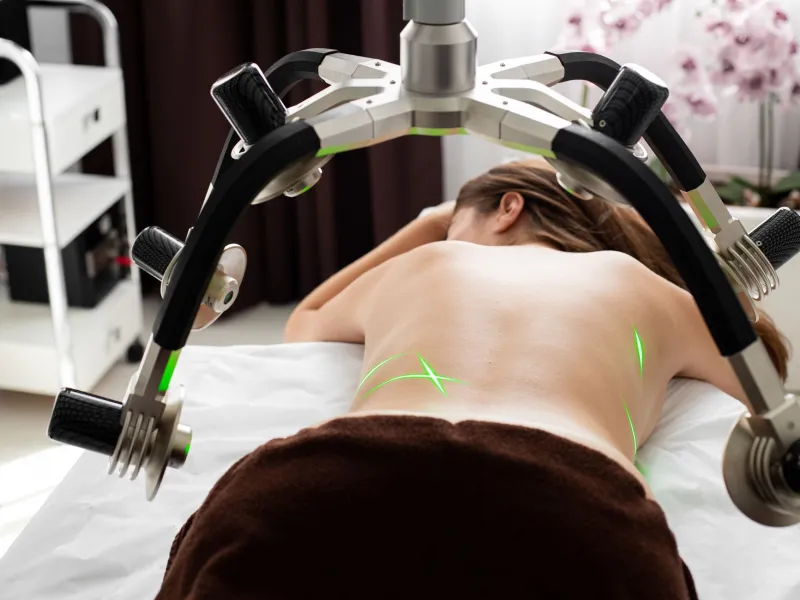
This is exactly the territory where magnetic therapy enters the picture. Pulsed electromagnetic field (PEMF) therapy, which uses low-frequency magnetic fields to interact with the body's tissues, has accumulated a notable body of clinical research. The FDA has cleared PEMF devices for bone healing and depression treatment, and ongoing studies are exploring applications for pain management, circulation, and cellular recovery. The underlying hypothesis — that an external magnetic field can nudge the body's own electrical environment in beneficial directions — now has a much more credible biological framework to sit within.
Why Holistic Practitioners Were Ahead of the Curve
Acupuncture, Ayurveda, traditional Chinese medicine, and various indigenous healing traditions have long described the body in terms of energy flow — qi, prana, meridians, chakras. Western medicine spent much of the 20th century dismissing these frameworks as unscientific. But a funny thing happened: the more researchers looked at the body's actual electrical anatomy, the more some of those ancient maps started to look surprisingly accurate.
Studies have found that many classical acupuncture points correspond to areas of lower electrical resistance on the skin — meaning they conduct electricity differently than surrounding tissue. Whether that vindicates the full theoretical framework of traditional Chinese medicine is a separate debate. But it does suggest that these traditions were, at minimum, picking up on something real about the body's electrical geography, even without the tools to fully explain it.
This isn't about abandoning critical thinking or accepting every wellness claim at face value. It's about recognizing that the body is more electrically complex than our standard biology education let on, and that some traditional frameworks may have been intuiting real phenomena through a different conceptual lens.
What This Means for Your Everyday Wellness
So how does all of this translate into practical choices you can make right now? A few directions worth exploring:
Ground yourself — literally. Emerging research on "earthing" or grounding suggests that direct physical contact with the earth (bare feet on grass or soil) may allow the body to absorb free electrons from the ground's surface, potentially reducing inflammation and supporting electrical balance. It's low-cost, low-risk, and increasingly studied.
Reduce electromagnetic interference. While the science on EMF exposure from devices is still evolving, there's reasonable logic in minimizing unnecessary exposure — especially during sleep — to avoid potential disruption to your body's own delicate electrical rhythms.
Consider PEMF therapy. If you're dealing with chronic pain, slow recovery from injury, or general fatigue, PEMF devices have a growing evidence base. Consult a healthcare provider to find out whether a clinical-grade device or a consumer-level option might be appropriate for your situation.
Pay attention to your heart field. The HeartMath Institute's research suggests that emotional states directly influence the coherence of the heart's electromagnetic field — and that a more coherent field has measurable effects on both the brain and the nervous system. Practices like slow, rhythmic breathing and intentional positive focus aren't just mood tools; they may literally be tuning your body's electromagnetic output.
The Bottom Line
The image of the body as a purely chemical machine is giving way to something richer and more dynamic — a self-organizing electrical system that communicates, adapts, and heals through fields and currents we're only beginning to map. That's not a mystical claim anymore. It's a research frontier.
For those of us interested in magnetic therapy and holistic wellness, this is genuinely exciting. It means the practices and tools we've been drawn to aren't standing apart from science — they're being folded into it, piece by piece. Your body has been running on this invisible electrical current your whole life. Learning to work with it, rather than ignoring it, might just be the most natural health upgrade available.